
The silence we cannot live with
Updated: Jul 26

Yesterday, I witnessed one of the quietest evenings of my life – the birdsong that normally filled the air with the most divine symphonies, felt like a tired whisper. The reason was unmistakable – the heatwaves of 2026 is wiping out our beautiful avians.
I have dreaded this day for a while now - ever since Dr Sailesh Rao declared to the world a few years ago, that 2026 is year Zero – the year when most wild animals will go extinct. I imagined what it would be like to walk out and no longer be able to hear the frequent calls of robins, blackbirds and wrens. The reality is worse than what I had in mind. Heartbreaking to the point of physical pain, the silence feels deafening.

It is not like we weren’t warned. Many scientists have tracked birdsong for over a decade, and reported an obvious decline. But the world paid no heed. Blaming everyone and everything, except the true leading cause of the climate and extinction emergencies (here’s a clue - it’s NOT the burning of fossil fuels).
Year on year, atmospheric heat kept breaking records, while wildfires became more frequent and extensive - burning down babies in their nests and choking their parents to death, as they struggled in vain to escape thousands of acres of raging flames.
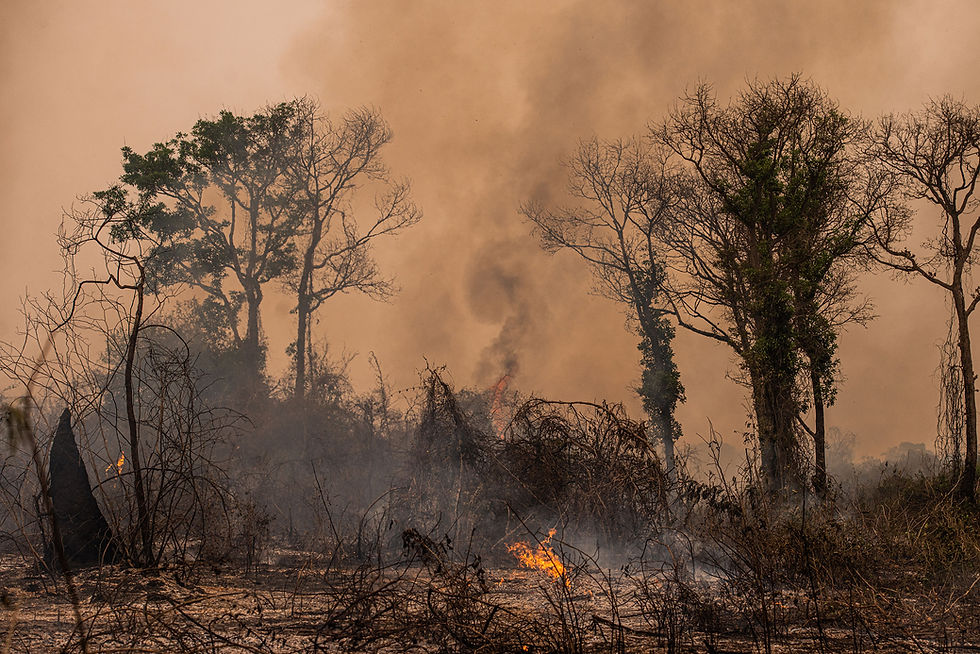
But this devastation (an inevitable consequence of man-made global warming) pales in comparison to the hundreds of millions of acres of tropical forests purposely destroyed by the dairy, meat and egg industries, over the last 50 years – around 1.5 to 2 billion acres globally.

To put this into perspective, each acre can hold around 400 trees. Each tree, a home for hundreds of avians. Each with families, friends, feelings and the desire to live. Complex individuals with complex lives and complex communication that feels like music to our ears. Until now.

And the proof is staring at me in the face. I’m sitting in the heart of South Wales, surrounded by at least 30 trees, and in the last hour I have witnessed only 3 avians flying by, against a backdrop of silence. Beyond the trees, I am surrounded by countless squares of cultivated farmland, growing corn, soy and grains – most of which will be harvested to feed millions of mothers and babies, confined in concentration camps, that we euphemistically call ‘factory farms’4.


Some of these patches of land have cows grazing on them. Globally, land for grazing and growing feed is occupying over 45% of all the ice-free land on Earth. That’s nearly half of all land on the planet – all of which was once forests, grasslands and ecosystems - home to trillions of original inhabitants, now extinct. Which means, gone forever.

More than 3 billion birds have recently vanished. And to date, scientists estimate that human activity may have actually driven over 1,400 avian species to extinction2. Besides destroying their homes, we are poisoning those they rely on - over 90% of bee colonies have collapsed, and more than 60% of insect populations have fallen in the UK, over just the last 2 decades3. Largely attributed to millions of gallons of pesticides, sprayed on monocultured crops, mostly to feed and fatten enslaved victims, prior to their pre-meditated murder.

The saddest irony is that 70% of all remaining birds on our planet, are confined in ghastly gulags, either having their eggs stolen, or awaiting their own slaughter5.

So, who is funding and enabling the murder of these Earth angels?
WE are – every time we go to the supermarket and buy stolen bovine baby food (dairy), unfertilised ova from confined females (eggs) and the brutalised body parts of mothers and babies (meat).
Our purchase creates an automatic demand for more abuse and murders, together with the extinction of free-living families (resulting from the occupation and burning down of more forested habitats for the reasons described above).

A vicious cycle of unimaginable violence, only enabled by a human population that has been taught to erroneously believe that this mass genocide is normal, natural and necessary6.
Perhaps it is time we disabled it, by fully shifting our purchases to plant foods – the original sources of all nutrients including protein, iron and calcium7. (B12 is made by bacteria found in the soil, which we can obtain via supplements).
Our savings and investments also play an absolutely vital role in dictating whether our living planet survives or dies – see here for banks and here for pensions.

Perhaps it is time we made ourselves aware of how close we are to our own extinction. Because it is the free-living avians, insects and mammals that are keeping our forests, oceans and soils alive. I mean where do we think our oxygen, food and water comes from? Or what do we believe is keeping our climate stable?

Perhaps it is time we looked up from our phones, went out and soaked in the diminishing whispers of birdsong, and finally made a promise to ourselves that we will do everything in our power to save the remaining species of avians. That if we protected their homes with the necessary actions, perhaps they will heal their populations back to their former glory. And give music back to this tiny blue planet, floating in the emptiness and deafening silence of space.

List of Actions to save and heal our fellow avians
1. End their genocide by going vegan, and empowering every one you know to do the same.
2. Heal their homes
- Plant native wildflowers, shrubs and trees
- Leave patches of grass uncut
- Provide fresh drinking water everyday
- Encourage schools and workplaces to plant native habitats
- Install nest boxes, on walls facing north, avoiding directly under roof
- Buy organic as much as possible to reduce pesticide use
- Financially support the Vegan Land Movement and Sadhana Forest
3. Adopt those lucky enough to be rescued – message me to help you with the set up. I adopted rescued hens over 12 years ago, and it is simply one of the best achievements of my life. It is also very easy to do and requires very little maintenance.
Message me to help you set it up.
Together we plan and we win. - Message me to discover how we can empower our families, communities, organisations and businesses, to become guardians - vitally engaged in healing our dying world.
References
1. Drivers of deforestation – Our World in Data
2. Cooke, R., Sayol, F., Andermann, T. et al. Undiscovered bird extinctions obscure the true magnitude of human-driven extinction waves. Nat Commun 14, 8116 (2023). https://doi.org/10.1038/s41467-023-43445-2


Comments